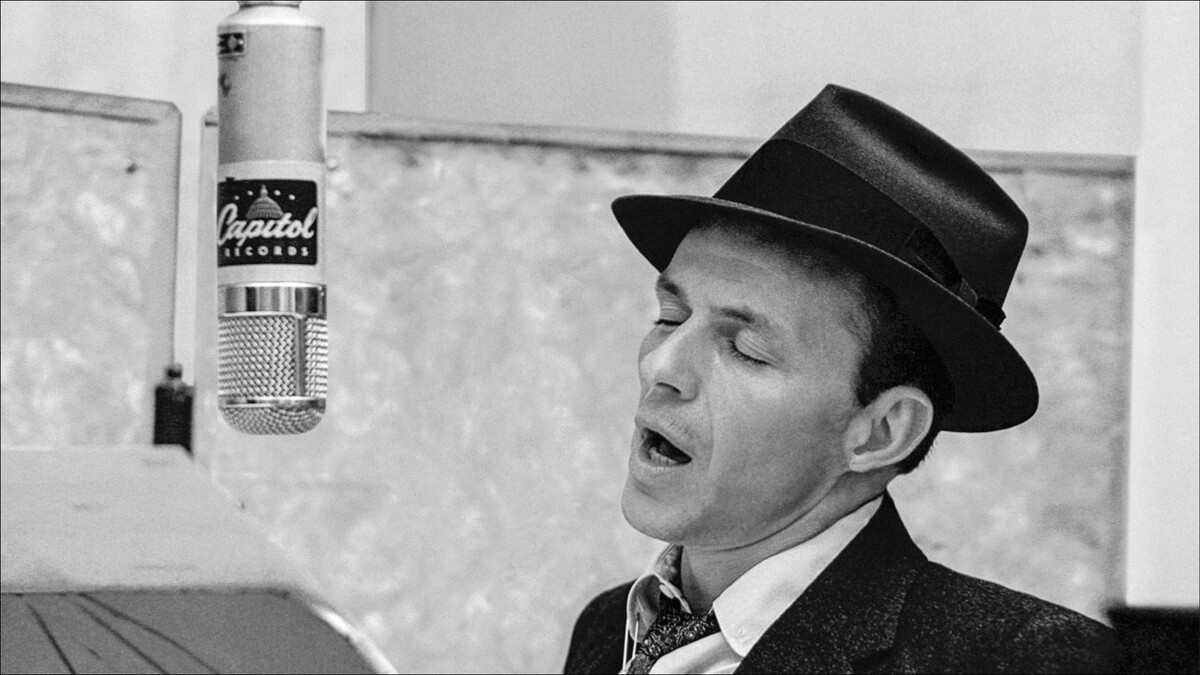
On August 9, 1981, Buenos Aires lived a historic night: Frank Sinatra performed for the first time at the Luna Park stadium, turning the old venue into a rare cultural event. The audience, which filled the Luna Park with an unusual gala atmosphere, celebrated the presence of a unique artist. Sinatra would repeat the performance the next day before heading to Brazil. The concert, produced by Palito Ortega, opened with "Fly Me to the Moon" and included classics such as "I’ve Got You Under My Skin", "Strangers in the Night", "The Lady Is a Tramp", as well as a standing ovation finale with "New York, New York" and "My Way". His performance was recorded as an oasis of brilliance in a country going through a crisis and dictatorship, a night when Buenos Aires felt, for a moment, like the capital of the world. Sinatra died in 1998, but his legacy continues to resonate with every new reissue, documentary, or appearance of his classics in films and series. His work, which spanned six decades and different eras of popular music, maintained the premise that guided him from the beginning: the conviction that a good song deserves to be performed with honesty, swing, and enduring emotion. Sinatra achieved what few 20th-century musicians could even imagine: he crossed complete generations without losing relevance. Emerging in the golden age of big bands, consolidated in the era of the "sing era," and still relevant when rock already dominated the market, the singer became an interpreter capable of re-signifying the American classic repertoire and fixing it in the collective memory. Born on December 12, 1915, to a firefighter from New Jersey, Sinatra dropped out of high school to dedicate himself to music. His professional career took off in 1935 when he participated with the group Hoboken Four in the radio show "Major Bowes’ Original Amateur Hour." Shortly after, he worked as a waiter and master of ceremonies while refining his vocal style. His life changed in 1939 when trumpeter Harry James heard him on the radio and hired him for his orchestra. In late 1939 came the major leap: the move to Tommy Dorsey's orchestra, one of the most prestigious in the United States. With him, he recorded 16 hits that entered the Top Ten, including "I’ll Never Smile Again," later inducted into the Grammy Hall of Fame. In the early 1950s, his career went into decline. However, a renaissance came in 1953 when he signed with Capitol and found in arranger Nelson Riddle a decisive artistic ally. From that partnership, the famous "concept albums" emerged, including "Songs for Young Lovers," "In the Wee Small Hours," and "Songs for Swingin’ Lovers!", which modernized the standards of the great composers of Broadway and Hollywood. In the 1940s, he expanded his presence on radio, in film, and on records. Sinatra signed with Columbia, starred in his own show, participated in musical comedies, and amassed a string of songs that made him the leading male voice in the industry. But in the early 1950s, his career entered a decline. Creative conflicts with the record label and a changing musical landscape left him without a contract. The renaissance arrived in 1953 when he signed with Capitol and found in arranger Nelson Riddle a decisive artistic ally. Those early recordings marked the beginning of his ascent. At 65 and at the peak of his career, "The Voice" left the exclusive Sheraton circuit for one night to meet a massive audience that had made a significant financial effort amid a strong devaluation.